“We can do this in four minutes. Whilst you spend four days. That's the benefit.”
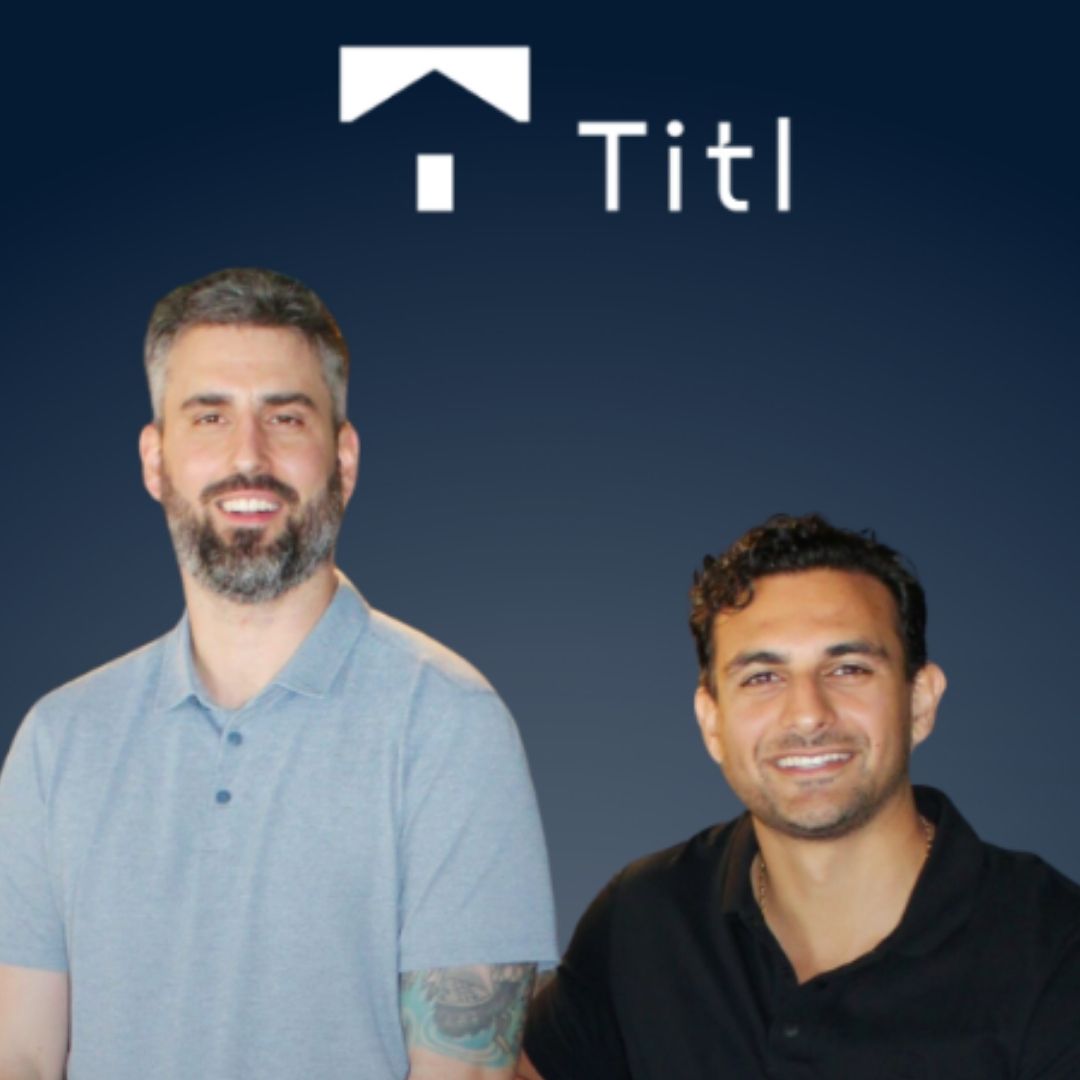
Titl is a Miami proptech company that recently raised $2.5M to automate property title searches, replacing a process that currently takes four or more days of manual work across fragmented county records.
The big idea: Every property transaction in the United States requires a clear title before it can close. Confirming that title means verifying there are no liens, violations, unresolved mortgages, or ownership disputes on a property. Today, that verification requires a lawyer or title agent to manually check records from multiple county databases. Titl automates the entire process with AI.
"The title industry is a whole separate industry within real estate and what you need prior to purchasing a home is a clear title."
— Tory Ricalis & Ori Ohayon, Titl Co-Founders
Why it matters: The main clients for title data are title insurance underwriters, title agents, and lenders. Every one of them depends on a process that hasn't fundamentally changed in decades. A single search still takes four days or more because the data is scattered across jurisdictions with no standardized system.
The core challenge is that government records are inconsistently filed. The data is messy in three distinct ways.
"all this data that the government is responsible for indexing and uploading to be public record is typically inconsistently filed."
— Ori Ohayon & Tory Ricalis, Titl Co-Founders
Zoom in: The inconsistencies fall into three categories.
- Data entry errors. Typos, misspellings, and street names recorded differently across deeds.
- Format variation. Name ordering (last name first vs first name last), abbreviations, and filing conventions that differ from one record to the next.
- Jurisdictional fragmentation. Every municipality and county has its own databases and its own rules, so there is no single standardized system.
Building for accuracy that insurers can trust
Titl built an AI system with guardrails designed to handle the inconsistencies across every county's records. Without that level of accuracy, the output wouldn't be reliable enough to insure.
"We've spent years perfecting the models and testing and debugging to make sure that our data spits out near-perfect accuracy."
— Ori Ohayon & Tory Ricalis, Titl Co-Founders
Every edge case, every new county, and every client interaction makes the system more reliable. The model improves with use.
Becoming the source of truth for title insurance
Titl's strategy is to supply the data that every title insurer needs via a flexible API capable of responding to the nuances of a specific location or use case.
"We are growing with our current clients to expand nationally, get paid to get this data, and then we're able to hold this data and eventually resell this data."
— Tory Ricalis & Ori Ohayon, Titl Co-Founders
The flywheel: The more clients Titl serves, the more municipalities they cover and the more data they acquire. The more data they acquire, the more valuable they become to future clients.
"Being a data platform means that your own application matters less and your client's application matters more."
— Ori Ohayon & Tory Ricalis, Titl Co-Founders
Zoom in: The platform advantage rests on three pillars.
- API flexibility. The engineering capability to make the data consumable in whatever format the client requires.
- Integration depth. When clients embed Titl's data into their own workflows, it becomes part of the infrastructure they depend on.
- Customization. Titl delivers a bespoke service which informs future data acquisition and how to structure the API going forward.
"We're faster and cheaper, it works and we have proven it."
— Ori Ohayon & Tory Ricalis, Titl Co-Founders
How Titl wins
- Identifying that property records are fragmented across different municipalities, systems, and formats.
- Building an AI stack uniquely capable of handling this complexity.
- Funding expansion and data acquisition through a flywheel data service model.
- Becoming experts at rapid iteration, even when it's painful.
- Standardizing property data and storing it in an on-chain digital land registry. The first of its kind.